Horizon App Design
Low-maintenance communication system for long distance families
Project Overview
Horizon is a low-maintenance communication system designed for long-distance families.
The project explores how communication can better support connection when people have limited emotional and cognitive capacity. Through research on emotional bandwidth, belonging, and digital communication behaviors, I identified a key tension: people often want to stay connected, but existing tools require more effort and consistency than they can realistically sustain.
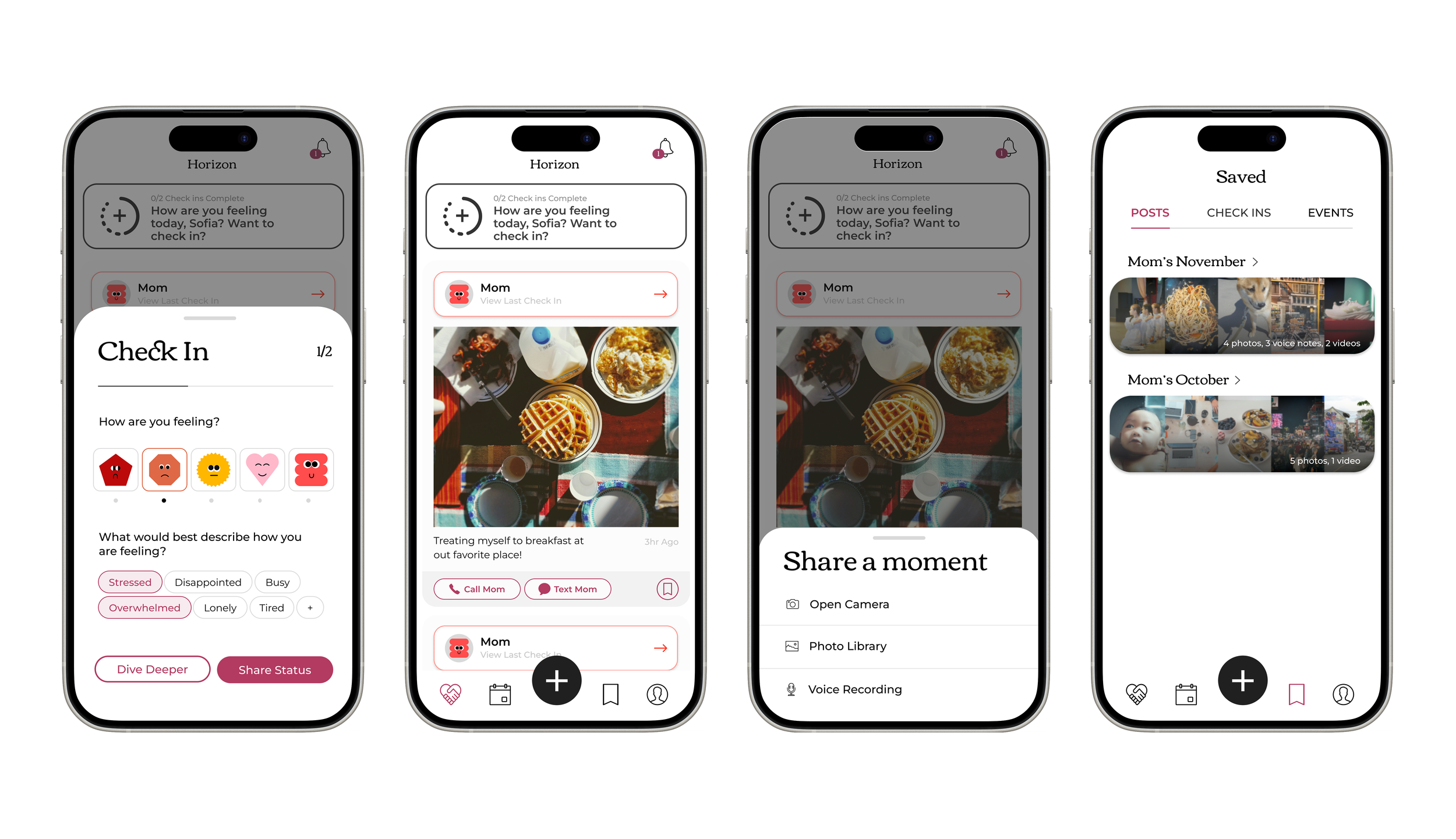
Horizon addresses this by introducing lightweight, intentional interactions such as quick emotional check-ins, signals of presence, and gentle follow-up prompts to reduce pressure while maintaining meaningful connection over time.

Feature 1:
Lightweight Check-ins
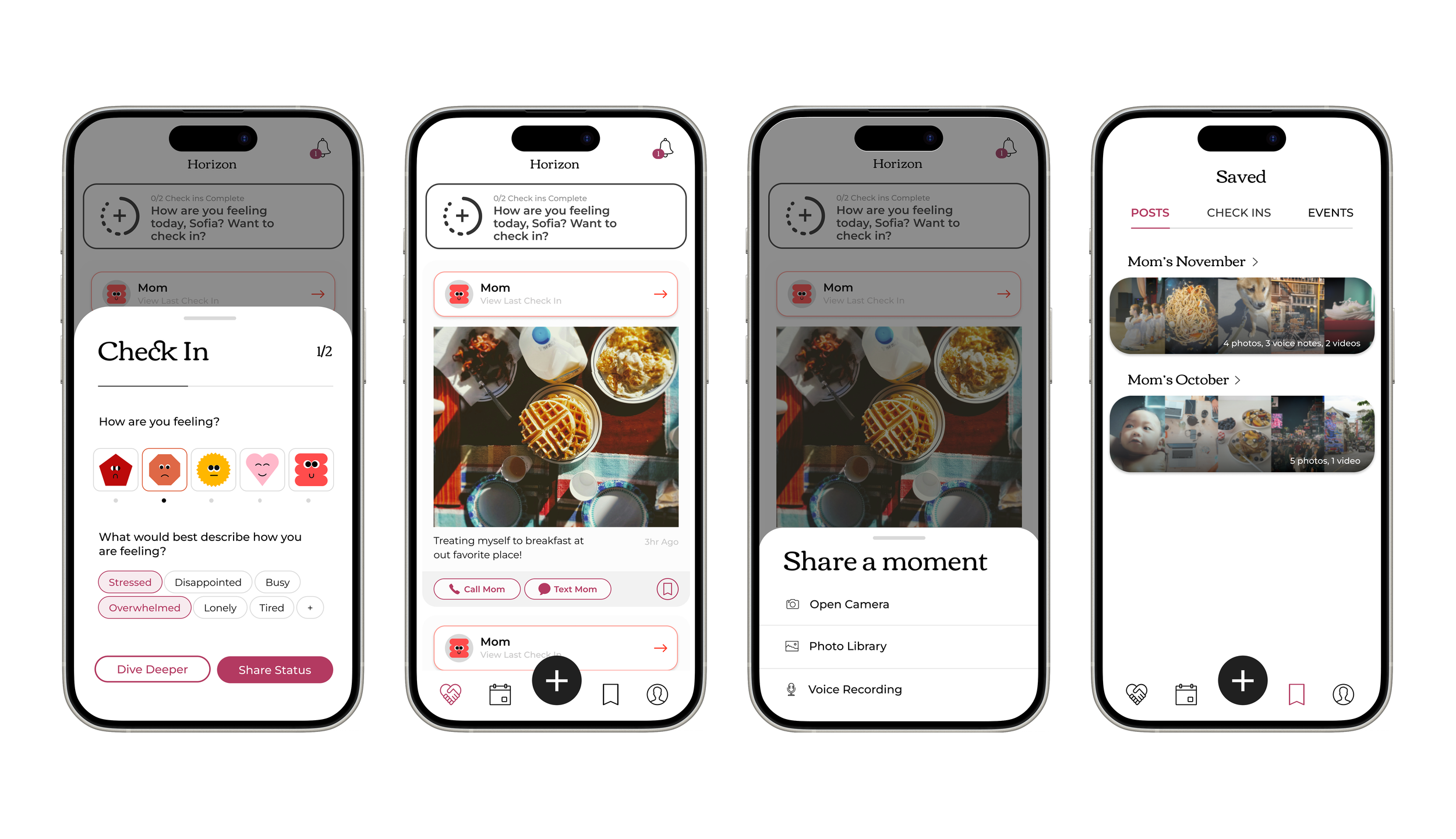
Feature 2:
Signals of Presence
Share small, everyday moments (photos, updates, voice notes)
Encourages intentional interaction rather than passive engagement
Reinforces a sense of presence without requiring a full conversation
Builds connection through consistent, lightweight touchpoints
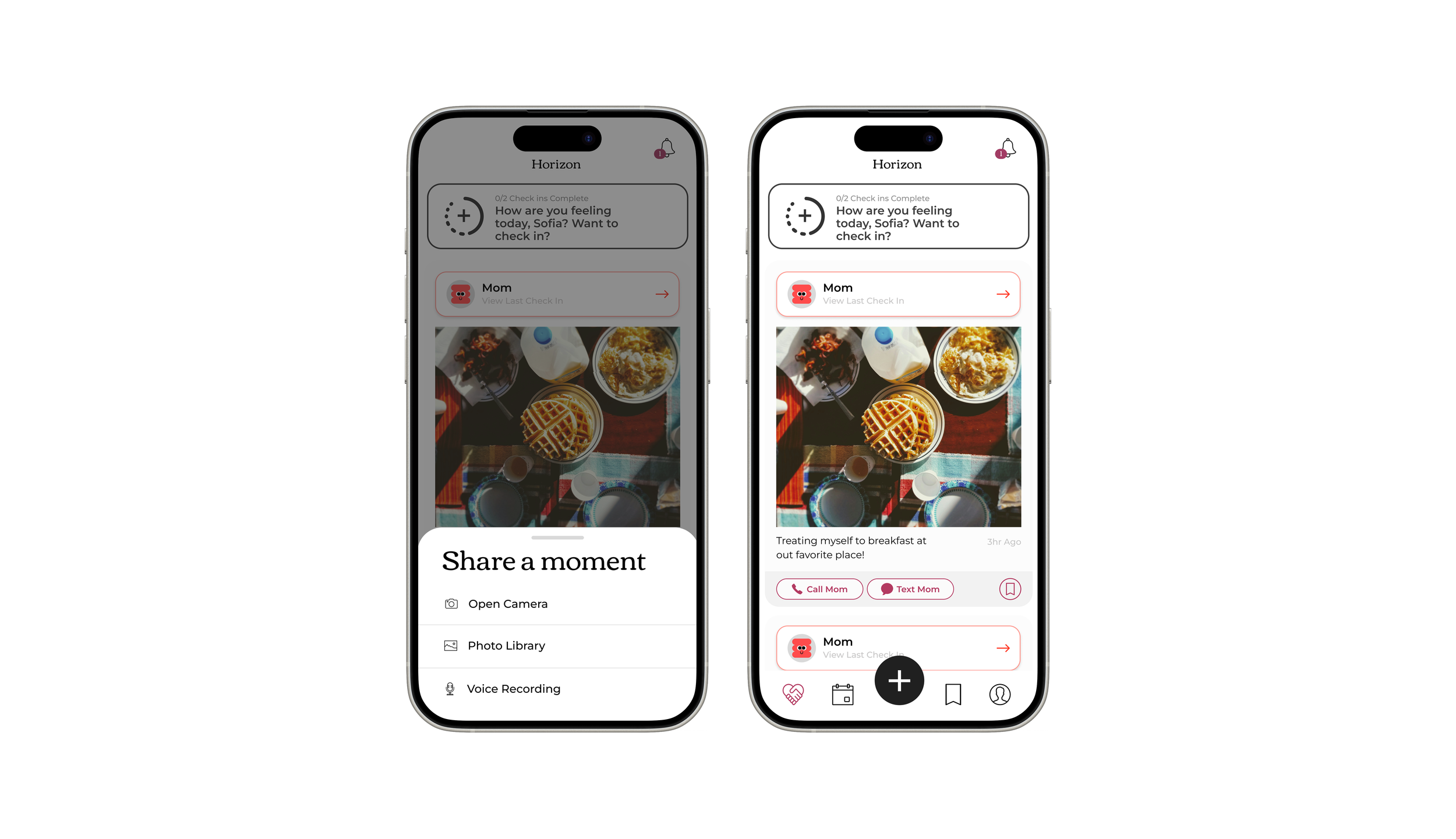
Feature 3:
Follow through support
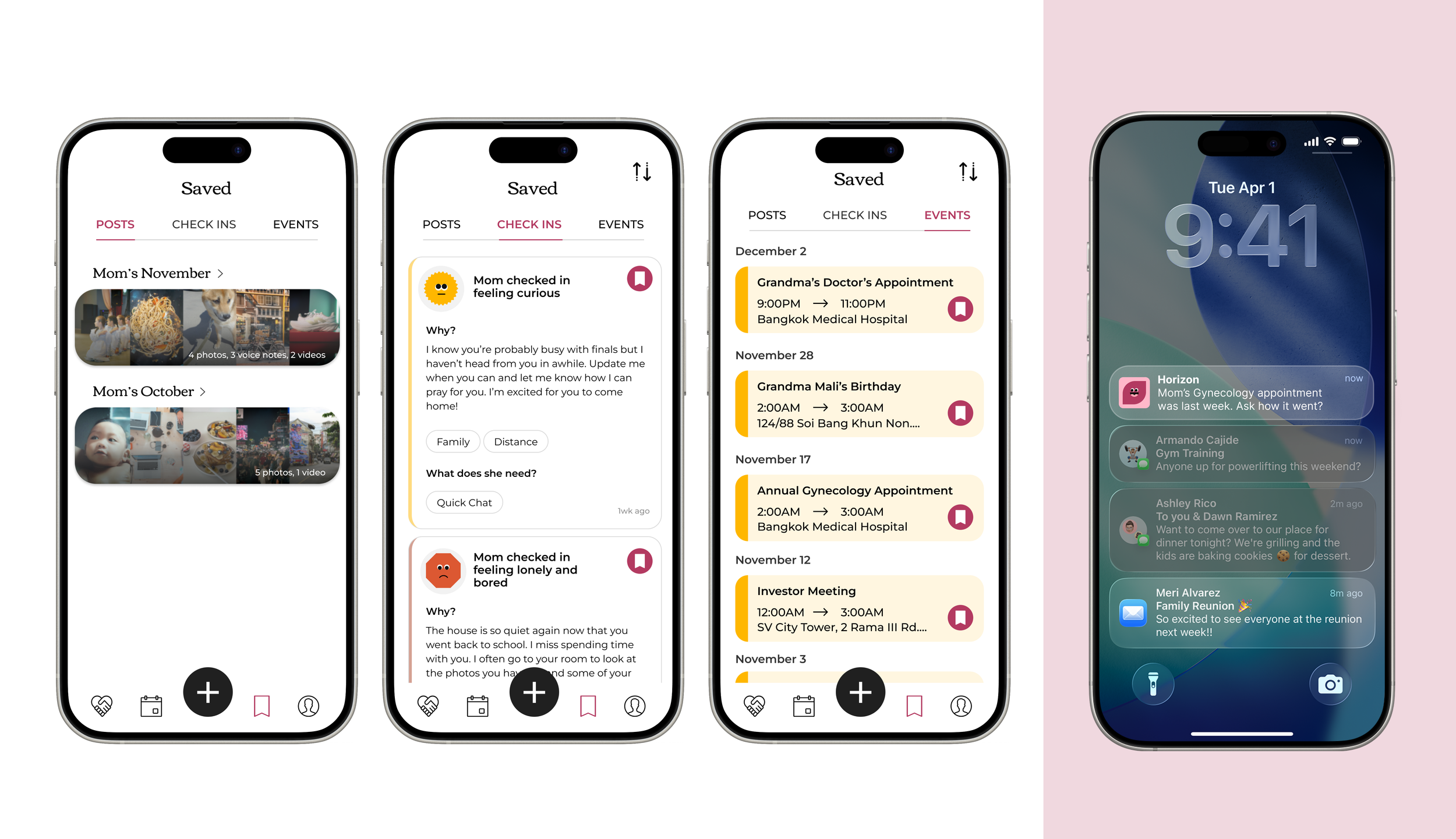
Save meaningful moments (check-ins, updates, events) in one place
Receive gentle prompts to follow up at the right time
Reduces the cognitive load of remembering to reach out
Supports ongoing, sustainable connection over time
Key Takeaways
Communication challenges are often driven by limited capacity rather than a lack of care. This project highlights how small, consistent signals can be more effective than infrequent, high-effort interactions, and how designing for low-effort, intentional engagement can better support real-life relationships. By reducing cognitive load and supporting follow-through, systems can play a more active role in helping people maintain meaningful connection over time.
This project was developed through a research-driven process, translating emotional and behavioral insights into interaction design.
View full case study here.